Welch Allyn Blood Pressure Monitor Manual: A Comprehensive Guide

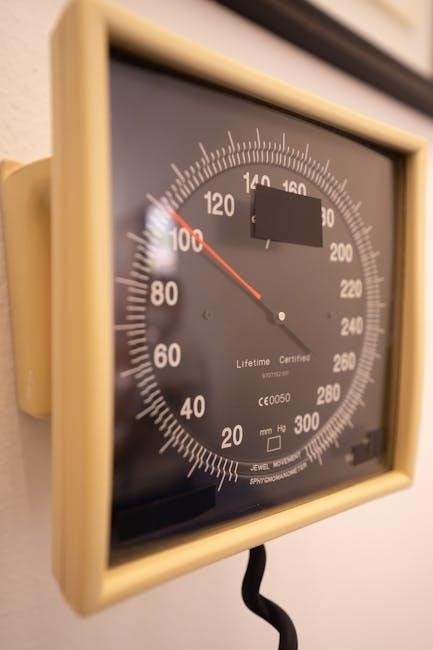
This manual details the accurate use of Welch Allyn vital signs devices‚ validated against British Hypertension Society standards. It acknowledges the mercury sphygmomanometer
as a gold standard‚ focusing on interpreting Korotkoff sounds for precise systolic and diastolic readings.
Welch Allyn blood pressure monitors represent a cornerstone in modern healthcare‚ renowned for their durability‚ accuracy‚ and reliability in clinical settings. For decades‚ healthcare professionals have trusted these devices for routine patient assessments and critical vital sign monitoring. This comprehensive guide serves as a detailed resource for understanding‚ operating‚ and maintaining Welch Allyn blood pressure monitoring equipment.
The importance of accurate blood pressure measurement cannot be overstated. It’s a fundamental indicator of cardiovascular health‚ crucial for diagnosing hypertension‚ hypotension‚ and various related conditions. Welch Allyn consistently strives to meet and exceed industry standards‚ as evidenced by validation studies like those conducted according to the British Hypertension Society protocols.
This manual will navigate users through the nuances of both manual and automatic measurement techniques‚ emphasizing the correct interpretation of readings and the significance of proper cuff selection and application. Understanding the principles behind these monitors‚ including the recognition of Korotkoff sounds‚ is paramount for obtaining dependable results and ensuring optimal patient care.
Types of Welch Allyn Blood Pressure Monitors
Welch Allyn offers a diverse portfolio of blood pressure monitors designed to cater to a wide range of clinical needs and settings. Traditionally‚ they’ve been recognized for robust manual models‚ requiring auscultation skills for accurate readings – relying on the healthcare professional’s interpretation of Korotkoff sounds. These models provide a direct‚ skill-based assessment of blood pressure.
However‚ Welch Allyn has significantly expanded its offerings to include advanced automatic and digital blood pressure monitors. These devices utilize oscillometric technology‚ providing convenient and efficient measurements with minimal user intervention. Digital models often feature integrated data storage and connectivity options for streamlined electronic health record (EHR) integration.

Furthermore‚ Welch Allyn provides specialized monitors for specific applications‚ such as ambulatory blood pressure monitoring (ABPM) for 24-hour blood pressure tracking‚ and wireless solutions for enhanced mobility within clinical environments. The choice of monitor depends on factors like clinical workflow‚ user expertise‚ and the specific requirements of the patient population being served.
Understanding Blood Pressure Readings
Blood pressure is recorded as two numbers: systolic and diastolic‚ measured in millimeters of mercury (mmHg). Systolic pressure‚ the higher value‚ represents the pressure in arteries when the heart beats – reflecting the force of ventricular contraction. Diastolic pressure‚ the lower value‚ indicates the pressure in arteries when the heart rests between beats‚ showcasing arterial resistance.
Normal blood pressure generally falls below 120/80 mmHg. Elevated readings‚ between 120-129 systolic and less than 80 diastolic‚ suggest heightened risk. Hypertension‚ or high blood pressure‚ is defined as consistently exceeding 130/80 mmHg‚ categorized into stages based on severity.
Accurate interpretation relies on correctly identifying Korotkoff sounds – the tapping sounds heard through a stethoscope during manual measurement. These sounds signify the systolic and diastolic pressures. Understanding these readings is crucial for assessing cardiovascular health and guiding appropriate clinical interventions‚ ensuring patient well-being and effective management of potential risks.
Components of a Welch Allyn Blood Pressure Monitor
A Welch Allyn blood pressure monitor typically comprises several key components working in unison to deliver accurate readings. These include the manometer‚ which displays the pressure measurements‚ available in both aneroid (mechanical) and digital formats. The inflation bulb‚ used for manual inflation‚ and the quick-deflation valve control the cuff’s pressure.
Crucially‚ the system incorporates a cuff‚ available in various sizes to ensure proper fit‚ and a stethoscope for auscultatory measurements – listening for Korotkoff sounds. Digital models feature integrated sensors and displays‚ often with memory storage capabilities.
More advanced units may include features like automatic inflation/deflation‚ irregular heartbeat detection‚ and connectivity options for data transfer. Understanding each component’s function is vital for proper operation‚ maintenance‚ and troubleshooting‚ ultimately guaranteeing reliable blood pressure assessments and contributing to effective patient care.
Cuff Selection and Proper Application

Selecting the correct cuff size is paramount for accurate blood pressure readings. Using an inappropriately sized cuff – too small or too large – can lead to falsely elevated or lowered results. Welch Allyn offers cuffs in a range of sizes‚ typically indicated by arm circumference measurements. Always choose a cuff where the bladder encircles at least 80% of the patient’s arm.
Proper application is equally crucial. The cuff should be placed directly on the bare arm‚ approximately one inch above the antecubital fossa (the bend of the elbow). Ensure the artery marker aligns with the brachial artery. The cuff should be snug but not constricting‚ allowing space for two fingertips to slide underneath.
Incorrect positioning or a poorly fitted cuff compromises measurement accuracy‚ potentially impacting clinical decisions. Regular checks of cuff integrity and adherence to these guidelines are essential for reliable blood pressure monitoring.
Preparing the Monitor for Use
Before initiating blood pressure measurement‚ ensure the Welch Allyn monitor is fully prepared. This begins with verifying sufficient battery power or a secure connection to a power source. Inspect all components – the monitor unit‚ cuff‚ and connecting tubing – for any signs of damage‚ such as cracks‚ leaks‚ or frayed wires. Damaged equipment should not be used.
Confirm the correct cuff size has been selected and is properly attached to the monitor. Power on the device and allow it to complete its self-test sequence‚ indicated by visual or auditory cues. Familiarize yourself with the monitor’s controls and display‚ noting the functions of each button and the meaning of any displayed symbols.
A properly prepared monitor‚ coupled with a thorough understanding of its operation‚ is fundamental to obtaining accurate and reliable blood pressure readings‚ ultimately supporting informed clinical assessments.
Manual Blood Pressure Measurement Technique
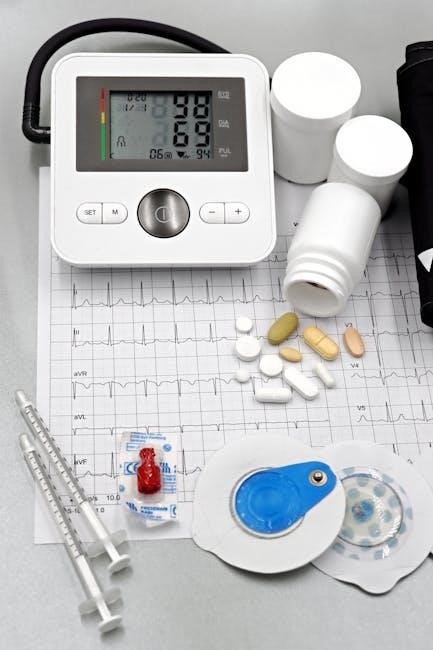
Employing the manual technique with a Welch Allyn monitor requires focused attention to detail. Begin by positioning the patient comfortably with their arm supported at heart level. Palpate the brachial artery to locate the pulse point. Apply the cuff snugly‚ ensuring proper alignment with the artery.
Place the diaphragm of the stethoscope firmly‚ but not tightly‚ over the brachial artery. Close the valve on the inflation bulb‚ then rapidly inflate the cuff until the radial pulse disappears. Slowly release the valve‚ decreasing pressure at a rate of 2-3 mmHg per second.
Carefully listen for the Korotkoff sounds – the first clear tapping sound indicates systolic pressure‚ while the disappearance of sounds marks diastolic pressure. Record both values accurately. Consistent practice and adherence to established protocols are crucial for reliable manual readings.
Automatic Blood Pressure Measurement Technique

Welch Allyn automatic blood pressure monitors simplify the measurement process‚ yet proper technique remains vital for accuracy. Ensure the patient is seated comfortably with their arm supported at heart level. Apply the appropriately sized cuff‚ aligning the artery marker with the brachial artery.
Power on the device and select the appropriate measurement mode. Initiate the measurement by pressing the start button. The monitor will automatically inflate the cuff and determine systolic and diastolic pressures. Remain quiet and still during the measurement cycle.
The results will be displayed digitally on the monitor screen. Note both systolic and diastolic values‚ as well as the pulse rate. Automatic measurements offer convenience‚ but regular verification against manual readings is recommended to confirm accuracy and device functionality.
Interpreting Measurement Results
Understanding blood pressure readings is crucial for effective healthcare. Systolic pressure‚ the higher number‚ reflects the force when the heart beats. Diastolic pressure‚ the lower number‚ indicates the force when the heart rests between beats. These values are recorded in millimeters of mercury (mmHg).
Normal blood pressure generally falls below 120/80 mmHg. Elevated readings‚ between 120-129 systolic and less than 80 diastolic‚ suggest increased risk. Hypertension‚ or high blood pressure‚ is defined as 130/80 mmHg or higher. Consistent high readings require medical attention;

Consider individual factors like age‚ health conditions‚ and medications when interpreting results. Multiple measurements taken over time provide a more accurate assessment than a single reading. Always correlate blood pressure values with the patient’s overall clinical presentation and medical history.
Troubleshooting Common Issues
Encountering issues with your Welch Allyn monitor is sometimes unavoidable. If the device displays an error‚ consult the error code section of this manual for specific guidance. A common problem is an improperly applied cuff – ensure it’s snug but not too tight‚ positioned correctly on the upper arm.
Irregular heartbeats can affect readings; the monitor may display an error message or an unreliable result. Weak or absent pulses can also hinder accurate measurement. Check battery levels‚ as low power can cause inaccurate readings or device malfunction.
If the monitor consistently displays unusually high or low values‚ verify calibration. Ensure the tubing is securely connected and free of kinks. If problems persist after these checks‚ contact Welch Allyn support for assistance‚ referencing the model number and error codes.
Error Codes and Their Meanings
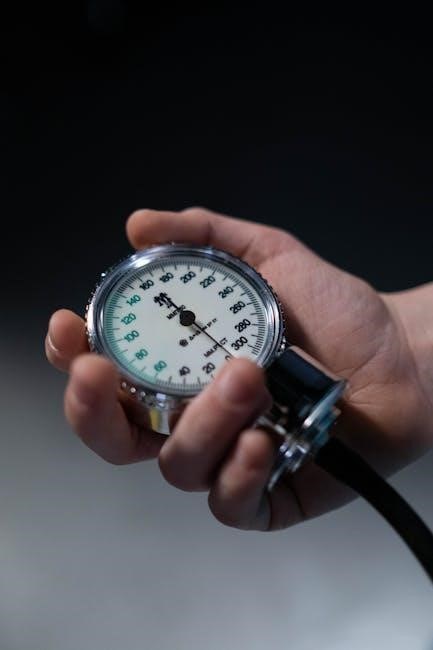
Welch Allyn blood pressure monitors utilize error codes to signal specific malfunctions. Code “E1” typically indicates a cuff pressure error‚ suggesting a leak or obstruction in the tubing. “E2” often signifies an irregular heartbeat detected during measurement‚ potentially impacting reading accuracy.
A “Low Bat” message clearly indicates insufficient battery power‚ requiring immediate replacement or recharging. “Err 3” may point to a communication error between the monitor and its components‚ necessitating a system reset. “Over” signifies pressure exceeding the monitor’s limits‚ potentially due to an incorrectly sized or applied cuff.
Consult the full error code list in the appendix for a comprehensive understanding of all potential messages. Addressing these codes promptly ensures reliable operation and accurate blood pressure readings. Ignoring error messages can lead to misdiagnosis or ineffective treatment.
Maintaining and Cleaning Your Monitor
Regular maintenance extends the lifespan and ensures the accuracy of your Welch Allyn blood pressure monitor. Disconnect the monitor from power before any cleaning procedure. The cuff and tubing should be cleaned with a damp cloth‚ using mild soap if necessary‚ and then thoroughly dried.
Avoid abrasive cleaners or solvents‚ as these can damage the materials. The monitor’s casing can be wiped down with a soft‚ dry cloth. Inspect the cuff and tubing regularly for cracks‚ leaks‚ or signs of wear. Replace damaged components immediately to maintain accurate readings.
Store the monitor in a clean‚ dry environment‚ away from extreme temperatures and direct sunlight. Proper storage prevents deterioration of the internal components. Avoid dropping or subjecting the monitor to strong impacts. Consistent care guarantees reliable performance and longevity.
Battery Replacement and Power Management
Optimal battery management is crucial for consistent operation of your Welch Allyn blood pressure monitor. When the low battery indicator appears‚ replace the batteries immediately to avoid interrupted measurements. Use only the specified type of batteries‚ as outlined in the device specifications – typically AA or C size alkaline batteries.
Ensure correct polarity when inserting new batteries. Remove old or depleted batteries promptly to prevent potential leakage and damage to the monitor. If the monitor will not be used for an extended period‚ remove the batteries to conserve power and prolong battery life.
Avoid mixing old and new batteries‚ or different types of batteries. Consider using rechargeable batteries for cost savings and environmental benefits‚ but ensure they are compatible with the monitor. Proper battery care ensures reliable performance and minimizes downtime.
Calibration and Accuracy Verification
Maintaining accuracy is paramount with any Welch Allyn blood pressure monitor. Regular calibration and verification are essential to ensure reliable readings‚ especially in clinical settings. While Welch Allyn monitors are designed for long-term stability‚ periodic checks against a mercury sphygmomanometer – considered the gold standard – are recommended.
Follow the calibration procedures detailed in this manual‚ utilizing appropriate calibration equipment if available. Document all calibration checks‚ noting the date‚ results‚ and any corrective actions taken. If discrepancies are detected‚ consult a qualified biomedical technician for assistance.
Accuracy verification should be performed after any repair‚ battery change‚ or suspected malfunction. Consistent monitoring against a known standard helps identify potential drift and ensures patient safety. Adhering to a strict calibration schedule guarantees dependable blood pressure measurements.
Comparison with Mercury Sphygmomanometers
Historically‚ the mercury sphygmomanometer has been the benchmark for blood pressure measurement‚ renowned for its accuracy and reliability. However‚ due to environmental concerns regarding mercury‚ digital and automated devices like Welch Allyn monitors have become increasingly prevalent.
Welch Allyn devices are rigorously tested and validated to provide readings comparable to mercury standards‚ particularly when utilizing proper technique and appropriate cuff size. Understanding the nuances of Korotkoff sound interpretation‚ traditionally associated with mercury devices‚ is crucial when evaluating automated readings.
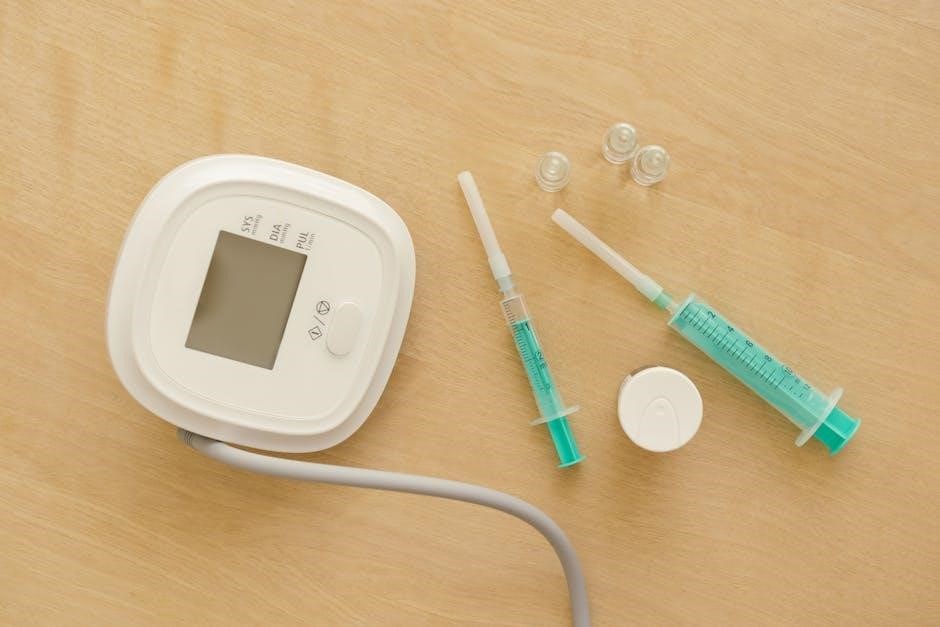
While automated monitors offer convenience and reduce observer error‚ occasional verification against a calibrated mercury sphygmomanometer is advisable‚ especially in critical care settings. This ensures continued accuracy and builds confidence in the Welch Allyn monitor’s performance‚ bridging the gap between traditional and modern methodologies;
Safety Precautions and Warnings
Prioritize patient safety when utilizing the Welch Allyn blood pressure monitor. Ensure the device and all components are inspected for damage before each use; discontinue if any defects are observed. Avoid applying the cuff over an intravenous line or arteriovenous fistula.
Never inflate the cuff excessively‚ as this can cause discomfort or injury. Be mindful of patients with fragile skin or those prone to pressure ulcers. Regularly check the cuff for proper inflation and deflation during measurement.
This device is not intended for continuous monitoring or use in life-sustaining applications. Always correlate blood pressure readings with the patient’s overall clinical condition. Keep the monitor dry and avoid exposure to extreme temperatures or humidity. Proper maintenance and adherence to these warnings are vital for safe and accurate operation.
Resources and Further Information
For comprehensive support regarding your Welch Allyn blood pressure monitor‚ several resources are readily available. Welch Allyn’s official website provides detailed product manuals‚ frequently asked questions‚ and troubleshooting guides. Access these resources at www.welchallyn.com for the latest updates and documentation.
The British Hypertension Society (BHS) offers valuable information on blood pressure measurement standards and validation protocols‚ crucial for understanding the accuracy of devices like the Welch Allyn monitor. Their website‚ www.bhsoc.org‚ provides access to research and guidelines.
Additionally‚ contacting Welch Allyn’s customer support team directly can provide personalized assistance. Trained professionals are available to address specific questions and concerns. Remember to have your device’s model number readily available when contacting support for efficient assistance.